Max Heart Rate by Age: Chart, Formulas and Safe Testing
Max heart rate by age chart for ages 20 to 80, comparing 220 − age with the Tanaka, Nes and Gulati formulas, plus target zones and how to test yours safely.
 Steps Team•
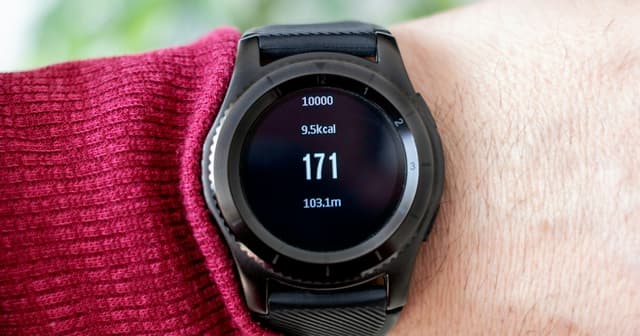
Your max heart rate is the highest number of beats per minute your heart can reach during all-out effort. The quickest estimate is 220 − age, which gives 180 bpm at age 40 and 160 bpm at age 60. Newer formulas built on measured data, such as Tanaka (208 − 0.7 × age), give slightly different answers, especially after 40. Every formula is an average: your real max can sit 10 bpm or more above or below the prediction.
That gap matters because almost every training target is a percentage of max heart rate. If the estimate is off, your zones are off too. This guide compares the four formulas you will see most often in one chart for ages 20 to 80, shows the target ranges that follow, and explains how to find your own number safely.
If you only want the numbers, the heart rate zones calculator estimates your max from your age, accepts a tested value if you have one, and returns all five zones.
What Is Max Heart Rate?
Max heart rate (also written HRmax or MHR) is the upper limit of how fast your heart can beat during exercise. Once you reach it, working harder does not push the number any higher. It is measured in a maximal exercise test, usually on a treadmill or bike, where the effort increases until you cannot continue. It is a ceiling, not a target: you train at percentages of it, and most useful exercise happens well below it.
Maximum Heart Rate Formulas Compared
A maximum heart rate calculator is only as good as the formula behind it. These are the four that appear most often.
| Formula | Equation | Where it comes from |
|---|---|---|
| Fox (the classic) | 220 − age | A 1971 review by Fox, Naughton and Haskell. A line fitted by eye to data from about 11 sources, not a dedicated study |
| Tanaka | 208 − 0.7 × age | 2001 meta-analysis of 351 studies and 18,712 subjects, then checked in a lab study of 514 healthy adults |
| Nes (HUNT) | 211 − 0.64 × age | 2013 analysis of 3,320 healthy men and women in Norway's HUNT Fitness Study |
| Gulati (women) | 206 − 0.88 × age | 2010 study of 5,437 women without symptoms of heart disease, mean age 52 |
220 − age is the one on gym posters and in the American Heart Association's target heart rate chart. It is easy to remember, but a 2002 review, "The Surprising History of the HRmax = 220 − age Equation", found it was not developed from original research.
Tanaka was built to fix that. In their Journal of the American College of Cardiology paper, Tanaka, Monahan and Seals concluded that the classic equation underestimates max heart rate in older adults, and that the age relationship was the same for men and women and for active and inactive people.
Nes comes from the HUNT Fitness Study, which only included people whose maximal effort could be verified. It gives the highest predictions of the four from age 30 up.
Gulati is the only one built from women alone. The Circulation paper concluded that the traditional calculation overestimates max heart rate for women. The cohort was aged 35 and older, so values for younger women are an extrapolation, and the Tanaka and Nes studies found no difference between sexes. Treat it as one more estimate, not a settled answer.
Max Heart Rate by Age Chart
Here is each formula worked out for ages 20 to 80, rounded to the nearest beat.
| Age | 220 − age | Tanaka | Nes (HUNT) | Gulati (women) |
|---|---|---|---|---|
| 20 | 200 | 194 | 198 | 188 |
| 25 | 195 | 191 | 195 | 184 |
| 30 | 190 | 187 | 192 | 180 |
| 35 | 185 | 184 | 189 | 175 |
| 40 | 180 | 180 | 185 | 171 |
| 45 | 175 | 177 | 182 | 166 |
| 50 | 170 | 173 | 179 | 162 |
| 55 | 165 | 170 | 176 | 158 |
| 60 | 160 | 166 | 173 | 153 |
| 65 | 155 | 163 | 169 | 149 |
| 70 | 150 | 159 | 166 | 144 |
| 75 | 145 | 156 | 163 | 140 |
| 80 | 140 | 152 | 160 | 136 |
How to read it:
- At 40, the classic formula and Tanaka agree (180 bpm). Below 40, 220 − age gives the higher number. Above 40, it gives the lower one.
- The gap grows with age. At 70, the estimates run from 144 to 166 bpm, a spread of 22 beats before individual variation is even considered.
- The formulas disagree on how fast max heart rate falls. The classic rule assumes 10 beats per decade. Tanaka and Nes, built on measured data, put it closer to 6 to 7.
How Accurate Are These Formulas?
Not very, for any one person. The HUNT study reported a standard error of 10.8 bpm for its own formula, and the 2002 review found errors of 7 to 11 bpm across published equations. In plain terms, roughly two out of three people land within about 11 bpm of the prediction, and about 1 in 20 is more than 20 bpm away.
So two healthy 50-year-olds can have true maxes of 160 and 190, and neither is abnormal. A formula tells you where the average person your age sits, not where you sit.
Target Heart Rate Zones by Age
Once you have a max, targets are simple percentages. The American Heart Association uses 50 to 70% of max for moderate intensity and 70 to 85% for vigorous intensity. The table below uses 220 − age, as the AHA's own chart does.
| Age | Est. Max HR | Moderate (50-70%) | Vigorous (70-85%) |
|---|---|---|---|
| 20 | 200 bpm | 100-140 bpm | 140-170 bpm |
| 30 | 190 bpm | 95-133 bpm | 133-162 bpm |
| 40 | 180 bpm | 90-126 bpm | 126-153 bpm |
| 50 | 170 bpm | 85-119 bpm | 119-145 bpm |
| 60 | 160 bpm | 80-112 bpm | 112-136 bpm |
| 70 | 150 bpm | 75-105 bpm | 105-128 bpm |
| 80 | 140 bpm | 70-98 bpm | 98-119 bpm |
If you prefer Tanaka, targets for older adults shift up a few beats. At 60, a max of 166 gives 83-116 bpm for moderate and 116-141 bpm for vigorous.
Those two bands are the simple version of heart rate zones by age. The five-zone model, covered in heart rate zones explained, splits the same range into 10% steps. For personal numbers, the heart rate zones calculator can also use your resting heart rate, which you can find with the resting heart rate calculator. Runners can pair zones with pace using the training pace zones tool.
Important: beta blockers and some other heart and blood pressure medications lower your heart rate and make age-based charts unreliable. If you take them, or you have a heart condition, get your target range from your clinician instead of a formula.
Fat-Burning Heart Rate
The "fat-burning heart rate" usually means about 60 to 70% of max, which is zone 2. At that intensity a larger share of the energy you burn comes from fat. With 220 − age, that is roughly 114 to 133 bpm at 30, 102 to 119 bpm at 50, and 90 to 105 bpm at 70.
It is a sustainable intensity, not a shortcut. Fat loss still depends on your overall energy balance, covered in what is a calorie deficit. For the training side, see zone 2 walking.
What Percentage of Max Is a Brisk Walk?
For most adults, a brisk walk lands at about 50 to 70% of max heart rate, often 100 to 120 bpm. A casual stroll usually stays under 50%. Hills, a fast power walk, or lower fitness can push walking to 70% or more. Our walking heart rate guide breaks this down by pace and age.
Why Your Max Falls With Age
The decline is a normal part of aging. Research by Christou and Seals (2008, Journal of Applied Physiology) compared healthy men averaging 25 and 65 years old and found two main causes:
- A slower built-in pacemaker. The heart's intrinsic rate, the pace it sets with no input from the nervous system, drops with age. This explained most of the difference.
- A weaker response to adrenaline. The older heart speeds up less for the same hormonal signal.
A Lower Max Does Not Mean Lower Fitness
Both the Tanaka and Nes studies found that max heart rate was not meaningfully different between active and inactive people of the same age. Endurance training does not raise it.
What training changes is everything below the max:
- Resting heart rate drops, because each beat pumps more blood. See how to lower resting heart rate.
- Heart rate at a given pace drops, so the same walk feels easier.
- VO2 max rises, which is the better single measure of aerobic fitness. Compare yours in VO2 max by age or estimate it with the VO2 max calculator.
How to Find Your Max Heart Rate Safely
The most accurate measurement is a supervised maximal exercise test in a lab or clinic. If you are healthy and already train hard regularly, a field test gets close.
Who Should Not Do a Max Test Alone
Skip the field test and talk to a doctor first if any of these apply:
- You have a known heart condition, or symptoms such as chest pain, fainting, palpitations, or unusual breathlessness
- You have high blood pressure, diabetes, or kidney disease and have not been cleared for vigorous exercise
- You take beta blockers or other medication that affects heart rate
- You are pregnant
- You are new to exercise or returning after a long break
You do not need a max test to exercise well. The talk test works at any age: at moderate intensity you can talk but not sing.
A Simple Field Test
Do this rested, in cool conditions, with a chest strap if you have one. Wrist sensors can miss short peaks.
- Warm up for 15 minutes with easy jogging or fast walking, finishing with a few short pick-ups.
- Find a steady hill that takes at least 2 minutes to climb.
- Climb hard for 2 minutes at an effort you could hold for about 10 minutes. Walk back down to recover.
- Climb again, harder, building so the last 30 seconds are very hard. Walk back down.
- Climb a third time, going all-out for the final minute.
- Check the highest reading. That is your working max heart rate.
Stop immediately if you feel chest pain, dizziness, or anything that worries you. Expect the result to be a few beats under a true lab max, and a few beats lower on a bike than on foot. Then enter it as a custom max in the heart rate zones calculator to rebuild your zones around it.
Why Your Watch Shows a Different Number
A watch or app often shows a max heart rate that matches neither the chart nor your own math. The usual reasons:
- A different formula. Devices do not all use 220 − age. A watch using a Tanaka-style formula will show a higher max for anyone over 40.
- Automatic updates. Some watches adjust the estimate after hard workouts, so the number drifts over time.
- Sensor errors. Optical wrist sensors can spike during pace changes, in the cold, or with a loose band. One odd reading of 205 bpm on an easy walk is a glitch, not a new max.
- A different zone method. Some devices calculate zones from heart rate reserve (max minus resting) rather than a straight percentage of max, so zone boundaries will not match a simple percentage chart.
Heat, dehydration, caffeine, and poor sleep all raise your heart rate at a given pace, but they do not raise the ceiling. Staying hydrated keeps readings comparable from day to day; see how much water you should drink a day.
Frequently Asked Questions
What is a normal max heart rate for my age?
Using 220 − age, the estimate is 190 bpm at 30, 180 at 40, 170 at 50, 160 at 60, and 150 at 70. The Tanaka formula gives 187, 180, 173, 166, and 159 for the same ages. A real max 10 or more beats away from these is still normal.
How do I calculate my maximum heart rate?
Subtract your age from 220 for the classic estimate, or use 208 − (0.7 × age) for the Tanaka formula. For example, at age 50: 220 − 50 = 170 bpm, or 208 − 35 = 173 bpm. A calculator does the same math and adds your zones.
Is 220 minus age accurate?
It is a usable rough average, but it tends to underestimate max heart rate in older adults and was never derived from a dedicated study. Like every age-based formula, it can be off by 10 bpm or more for an individual.
Do women have a lower max heart rate than men?
The evidence is mixed. The Gulati study of 5,437 women produced a lower formula (206 − 0.88 × age), while the Tanaka and Nes studies found no meaningful difference between men and women. Individual variation is larger than any average sex difference.
Is it dangerous to reach my max heart rate?
For healthy people who are used to hard exercise, brief efforts near max are a normal part of intense training. If you record a genuine reading above your predicted max, the prediction was simply too low. People with heart conditions or on heart medication should follow the limits set by their clinician.
Find Your Number, Then Walk by It
Your max heart rate is an anchor, not a goal. Estimate it with a formula, refine it with a field test if that is safe for you, and use it to set the ranges you train in. The AHA's moderate range of 50 to 70% of max is where a brisk walk sits, so start with the heart rate zones calculator and then go for a walk.
Steps: Workout & Pedometer counts your steps automatically on iPhone and Apple Watch and tracks your walks, so you can see whether your daily movement is adding up.
This article is for general information and is not medical advice. Talk to a doctor before starting vigorous exercise if you have a heart condition, take heart or blood pressure medication, or have symptoms such as chest pain or dizziness.
Ready to put your heart rate zones to work? Download Steps
You Might Also Like
Try Our Calculators
Steps is built by runners who wanted a step counter that felt right. Read our story