Walking Heart Rate: What's Normal by Age and Pace
What's a normal walking heart rate? See bpm ranges for casual, brisk and incline walks, a chart by age, how to find your target, and when to see a doctor.
 Steps Team•
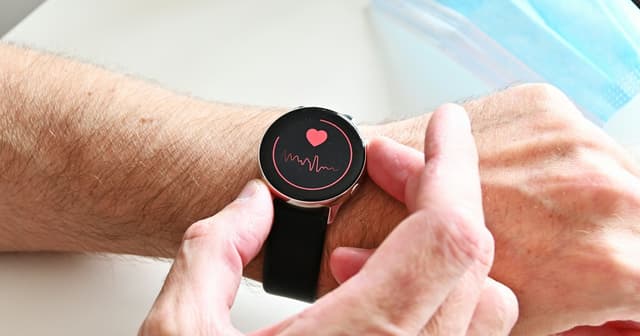
A normal walking heart rate for most healthy adults is roughly 90 to 130 beats per minute (bpm) on a brisk walk, and lower on a casual stroll. The American Heart Association puts moderate-intensity exercise like brisk walking at 50-70% of your maximum heart rate, while the CDC uses a slightly higher 64-76% band. For a 40-year-old, that works out to about 90-137 bpm depending on which definition you use, how fast you walk, and whether you're climbing a hill.
There's no single "correct" walking heart rate. Your number depends on your age, pace, terrain, fitness, the weather, and even how much coffee you had. This guide gives you the normal ranges for casual, brisk, and incline walking, a walking heart rate chart by age, a simple way to calculate your own target, and the signs that mean a high heart rate while walking deserves a doctor's attention.
What Is a Normal Heart Rate While Walking?
Your walking heart rate climbs from your resting heart rate (normally 60-100 bpm for adults) to a level that matches how hard your muscles are working. The faster or steeper you walk, the more oxygen your legs need, and the faster your heart beats to deliver it.
Here's how a typical walking heart rate breaks down by effort for an average adult:
| Walk Type | Typical Speed | Intensity | % of Max HR | Example: Age 40 (Max 180) |
|---|---|---|---|---|
| Casual stroll | Under 3 mph | Light | Under 50% | Under ~90 bpm |
| Brisk walk | 3.0-4.0 mph | Moderate | 50-70% (AHA) / 64-76% (CDC) | ~90-137 bpm |
| Incline or hill walk | Any pace uphill | Moderate to vigorous | 70-85% | ~126-153 bpm |
| Power walk / race walk | 4.5+ mph | Vigorous | 70-85% | ~126-153 bpm |
A few things stand out:
- A casual walking heart rate is often barely above resting. If you stroll at 2 mph, your walking heart rate may only rise 10-30 bpm above resting. That's normal, and it's still good for you, but it doesn't count as moderate exercise.
- Brisk walking is where most people land around 100-120 bpm. That's the most commonly cited normal heart rate for a brisk walk, and it falls inside the moderate-intensity zone for most adults.
- Hills change everything. Walking uphill at the same speed can push your walking heart rate into the vigorous range, which is why incline walking feels so much harder than flat walking.
Not sure if your pace actually counts as brisk? Our guide to what is brisk walking covers the speed, cadence, and talk-test benchmarks.
Why Two Different Percentages?
You'll see two "moderate intensity" definitions online, and both come from credible sources:
- American Heart Association (AHA): moderate = 50-70% of max heart rate; vigorous = 70-85%.
- CDC: moderate = 64-76% of max heart rate; vigorous = 77-93%.
The AHA band starts lower, so it includes gentler brisk walks and is friendlier to beginners and older adults. The CDC band is narrower and sits higher, so it reflects a more purposeful brisk pace. Neither is wrong. Think of 50-70% as "you're definitely exercising" and 64-76% as "you're walking with real intent." The chart below shows both.
Walking Heart Rate Chart by Age
Maximum heart rate falls as you get older, so your target walking heart rate falls too. A normal walking heart rate at 70 looks very different from one at 30. These numbers use the standard estimate of Max HR = 220 − age, then apply the AHA (50-70%) and CDC (64-76%) moderate-intensity bands.
| Age | Est. Max HR | Brisk Walk: AHA 50-70% | Brisk Walk: CDC 64-76% |
|---|---|---|---|
| 20 | 200 bpm | 100-140 bpm | 128-152 bpm |
| 30 | 190 bpm | 95-133 bpm | 122-144 bpm |
| 35 | 185 bpm | 93-130 bpm | 118-141 bpm |
| 40 | 180 bpm | 90-126 bpm | 115-137 bpm |
| 45 | 175 bpm | 88-123 bpm | 112-133 bpm |
| 50 | 170 bpm | 85-119 bpm | 109-129 bpm |
| 55 | 165 bpm | 83-116 bpm | 106-125 bpm |
| 60 | 160 bpm | 80-112 bpm | 102-122 bpm |
| 65 | 155 bpm | 78-109 bpm | 99-118 bpm |
| 70 | 150 bpm | 75-105 bpm | 96-114 bpm |
| 75 | 145 bpm | 73-102 bpm | 93-110 bpm |
| 80 | 140 bpm | 70-98 bpm | 90-106 bpm |
How to read this walking heart rate by age chart: if you're 50 and your watch shows 112 bpm on a brisk walk, you're comfortably in the moderate zone by both definitions. If you're 30 and see 105 bpm, you're in the AHA zone but below the CDC zone, so picking up the pace or adding a hill would make the walk more demanding.
Keep in mind that 220 − age is only an estimate. Real maximum heart rates vary by 10-12 bpm or more between people of the same age, so treat the chart as a starting point, not a verdict.
This chart is about overall walking intensity. If you specifically want to train in zone 2 (60-70%), use the age table in our zone 2 walking guide. For all five training zones and what each one does, see heart rate zones explained.
How to Calculate Your Target Walking Heart Rate
You can estimate your own walking heart rate target in under a minute. There are three common methods, from simplest to most personalized.
Method 1: The 220 − Age Formula
- Subtract your age from 220 to get your estimated max heart rate.
- Multiply by 0.50 and 0.70 for the AHA moderate range (or 0.64 and 0.76 for the CDC range).
Example (age 45): 220 − 45 = 175. 175 × 0.50 = 88 bpm and 175 × 0.70 = 123 bpm. Your brisk walking target is about 88-123 bpm.
Method 2: The Tanaka Formula (Better for Over-40s)
Research by Tanaka and colleagues found that the 220 − age formula tends to underestimate max heart rate in older adults. Their alternative is:
Max HR = 208 − (0.7 × age)
Example (age 60): 208 − 42 = 166 bpm, versus 160 bpm with the classic formula. At 50-70%, that gives a walking target of about 83-116 bpm.
Method 3: Heart Rate Reserve (Karvonen)
This method factors in your resting heart rate, so it adjusts for your fitness level. A fit person with a low resting heart rate gets a different target than someone who is just starting out.
Target HR = ((Max HR − Resting HR) × % intensity) + Resting HR
Example (age 45, resting HR 65): Max HR = 175. Heart rate reserve = 175 − 65 = 110. At 50%: (110 × 0.50) + 65 = 120 bpm. At 70%: (110 × 0.70) + 65 = 142 bpm. Target: 120-142 bpm.
The Karvonen numbers run higher because they start from your resting heart rate. Find yours with the Resting Heart Rate Calculator, then plug both numbers into the Heart Rate Zones Calculator to skip the math entirely.
How to Check Your Heart Rate While Walking
- Smartwatch or chest strap: the easiest way to see your walking heart rate live, minute by minute. Chest straps are the most accurate; wrist sensors can lag during pace changes or read high if the band is loose.
- Manual pulse check: place your index and middle fingers on the inside of your wrist (or the side of your neck), count beats for 30 seconds, and multiply by 2. Do it right after you stop, because your heart rate drops quickly.
- Talk test: no device needed. On a brisk walk at moderate intensity you can talk in full sentences but couldn't sing. If you can only get out a few words, you're in vigorous territory.
What Affects Your Walking Heart Rate?
Two people walking side by side at the same pace can have walking heart rates 30 bpm apart. The biggest factors:
- Fitness level: a well-conditioned heart pumps more blood per beat, so it needs fewer beats at any given pace.
- Pace and incline: speed and hills are the biggest drivers of your walking heart rate. Even a gentle grade adds noticeable effort.
- Heat and humidity: your walking heart rate runs higher in hot weather because your heart also has to send blood to your skin for cooling.
- Hydration: dehydration reduces blood volume, so your heart beats faster to compensate.
- Caffeine, nicotine, stress, and poor sleep: all can raise both resting and walking heart rate.
- Body weight and load: carrying more weight, whether body weight, a backpack, or a weighted vest, raises the effort of every step.
- Altitude: less oxygen in the air means a higher heart rate for the same walk.
- Medications: some drugs (such as certain decongestants or thyroid medication) can raise heart rate, while beta blockers lower it and make age-based charts unreliable. If you take heart or blood pressure medication, ask your doctor for your personal target.
When Is a High Walking Heart Rate a Concern?
A walking heart rate above 100 bpm is not automatically a problem. For many adults, 100-120 bpm on a brisk walk is exactly what you'd expect. What matters more is the context and how you feel.
Usually Not a Concern
- Your walking heart rate rises on hills, in the heat, or when you speed up, then settles when you slow down.
- You're new to exercise and your heart rate runs toward the top of the chart. This typically improves with a few weeks of regular walking.
- You can still talk comfortably and you feel fine.
Worth Raising With Your Doctor
- Your walking heart rate is routinely well above your target range even on an easy, flat stroll.
- Your heart rate stays high for a long time after you stop walking. In a well-known 1999 study in the New England Journal of Medicine, a heart rate that dropped by 12 bpm or less in the first minute after exercise was linked to higher mortality risk. Your doctor can tell you what your recovery means for you.
- Your resting heart rate is consistently above 100 bpm.
- You notice your heart rate suddenly jump and stay high, or your watch flags an irregular rhythm.
Stop and Get Medical Help
Stop walking and seek medical care right away (call 911 in the US) if you have:
- Chest pain, pressure, or tightness
- Shortness of breath that feels out of proportion to the effort
- Dizziness, lightheadedness, or fainting
- A racing, pounding, or irregular heartbeat that doesn't settle with rest
- Nausea or a cold sweat during exertion
Not medical advice. This article is general information, not a diagnosis. Heart rate targets vary with health conditions and medications. If you have a heart condition, are pregnant, take medication that affects heart rate, or have any symptoms above, talk to a qualified healthcare provider about the right walking heart rate for you.
How to Lower Your Walking Heart Rate With Fitness
The good news: a high walking heart rate is one of the most trainable numbers in your body. As your aerobic fitness improves, your heart pumps more blood per beat, and the same walk takes fewer beats. Many people see their heart rate at a given pace drop within a few weeks of consistent walking.
- Walk most days. Aim for at least 150 minutes of moderate activity a week, the AHA and CDC baseline. Even short sessions add up; see what walking 20 minutes a day can do.
- Build an easy aerobic base. Most of your walks should be at a comfortable, conversational pace. This is the intensity that improves heart efficiency the most over time. Our zone 2 walking guide shows how to target it.
- Add intervals once a week. Alternating faster and slower minutes trains your heart to recover quicker. The Japanese interval walking method is a simple, research-backed format.
- Progress gradually. Increase time, pace, or distance one at a time. Building from short walks to longer ones like walking 6 miles a day is a marathon, not a sprint.
- Manage the controllables. Drink water before and during walks, walk in the cooler parts of the day, cut back on late caffeine, and prioritize sleep.
- Lose excess weight if you have it. Less body weight means less work per step. Regular brisk walks help on this front too; read does walking burn fat for the details.
- Track your trend. Walk the same route at the same pace every few weeks and compare your average heart rate. A falling number is proof your heart is getting fitter.
Another good long-term marker is VO2 max, your body's maximum oxygen uptake. Estimate yours with the VO2 Max Calculator and re-check it every couple of months as your walking heart rate improves.
Walking Heart Rate vs Running Heart Rate
Running almost always produces a higher heart rate than walking, because it uses more muscle and lifts your body off the ground with every stride. A brisk walking heart rate typically sits in the moderate zone, while an easy jog often lands in the 70-80% range and a hard run climbs higher. If you're curious how fast runners actually move at those efforts, see average running speed. For heart health, both count: walking for cardio explains how to get a real cardiovascular workout without running.
Frequently Asked Questions
What is a normal walking heart rate?
For most healthy adults, a normal walking heart rate is about 90-130 bpm on a brisk walk, roughly 50-70% of estimated max heart rate. A casual stroll often keeps your heart rate under 100 bpm, while hills or fast walking can push it to 130-150 bpm or higher depending on your age.
What is a normal heart rate for a brisk walk?
Many adults land around 100-120 bpm on a brisk walk. By age, the AHA moderate range is about 95-133 bpm at 30, 85-119 bpm at 50, and 75-105 bpm at 70. Use the walking heart rate chart by age above for your exact range.
Is 120 bpm good for walking?
For most adults under about 65, 120 bpm is a solid brisk walking heart rate that sits in the moderate-intensity zone. For people over 70, 120 bpm may be above the moderate range, so slowing down slightly is reasonable unless your doctor says otherwise.
Is 140 bpm too high while walking?
It depends on your age and the terrain. For a 30-year-old walking uphill, 140 bpm can be perfectly normal. For a 70-year-old on a flat walk, it's well above the typical moderate range. If 140 bpm comes with chest pain, dizziness, or unusual breathlessness, stop and seek medical help.
Why is my heart rate so high when I walk slowly?
Common causes include low fitness, heat, dehydration, caffeine, stress, poor sleep, illness, or certain medications. A loose watch strap can also give false high readings. If your heart rate is consistently high on easy walks, or you have symptoms, see a doctor to rule out an underlying cause.
Does walking heart rate go down as you get fitter?
Yes. As your heart gets stronger, it pumps more blood per beat, so your heart rate at the same walking pace drops. Many people notice a lower walking heart rate and resting heart rate within a few weeks of consistent walking.
Track Your Walking Heart Rate With Steps
Knowing your target range is step one. Seeing it in real time on every walk is what turns that knowledge into progress. The Steps app tracks your walks on iPhone and Apple Watch, logging pace, distance, steps, and heart rate so you can watch your walking heart rate trend down as your fitness climbs.
Helpful tools to pair with it:
- Heart Rate Zones Calculator: get personalized bpm ranges for every zone
- Resting Heart Rate Calculator: see where your resting heart rate stands
- VO2 Max Calculator: estimate your aerobic fitness
Ready to know your walking heart rate on every walk? Download Steps, free on iPhone.
You Might Also Like
Try Our Calculators
Steps is built by runners who wanted a step counter that felt right. Read our story