How to Calculate Calories Burned: 3 Formulas Explained
How to calculate calories burned with the MET, heart rate and BMR × activity formulas, with worked examples, MET tables and daily burn by weight.
 Steps Team•
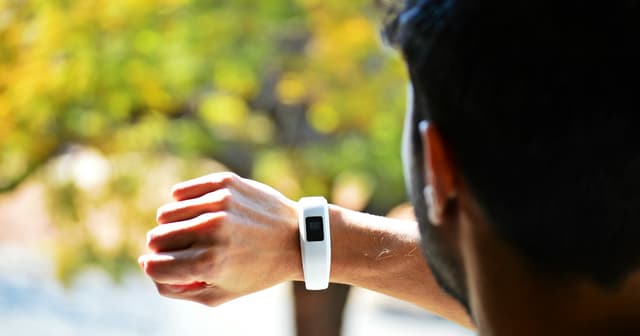
To calculate calories burned during exercise, multiply the activity's MET value by 3.5 and by your weight in kilograms, then divide by 200. That gives calories per minute. A 154 lb (70 kg) person walking briskly at 3.5 mph (4.8 METs) burns 4.8 × 3.5 × 70 ÷ 200 = 5.9 calories a minute, or about 176 calories in 30 minutes. For calories burned in a whole day, multiply your BMR by an activity factor of 1.2 to 1.725.
There are three standard ways to work out how many calories you burn, and each answers a slightly different question. The MET formula estimates a single activity from its type and pace. The heart rate formula estimates a workout from how hard your heart was working. BMR × activity factor estimates your total burn for a full day. This guide shows how to calculate calories burned with all three, with a fully worked example for each, then explains why your watch gives a different number.
If you want the answer without the math, the calories burned calculator runs the MET formula for dozens of activities.
How to Calculate Calories Burned: 3 Formulas at a Glance
| Method | Formula | Best for | What you need |
|---|---|---|---|
| MET | kcal/min = MET × 3.5 × kg ÷ 200 | One activity (walk, ride, lift) | Activity, pace, weight, time |
| Heart rate (Keytel) | kJ/min from HR, weight, age, sex ÷ 4.184 | A cardio workout | Average heart rate, weight, age, sex, time |
| BMR × activity factor | TDEE = BMR × 1.2 to 1.725 | A whole day | Weight, height, age, sex, activity level |
Method 1: How to Calculate Calories Burned With METs
A MET (metabolic equivalent of task) compares an activity to sitting still. Sitting quietly is 1 MET, defined as 3.5 ml of oxygen per kilogram of body weight per minute. An activity rated 4.8 METs uses 4.8 times that much energy.
The formula turns oxygen into calories. Your body burns about 5 calories for every liter of oxygen it uses, which is where the 3.5 and the 200 come from:
Calories per minute = MET × 3.5 × weight (kg) ÷ 200
MET values come from the Compendium of Physical Activities. Its 2024 adult update, published in the Journal of Sport and Health Science, lists 1,114 activities for adults aged 19 to 59, with 912 values measured directly in the lab.
Worked Example: A 30-Minute Brisk Walk
- Person: 154 lb, which is 70 kg (pounds ÷ 2.205)
- Activity: walking 3.5 mph on level ground, 4.8 METs in the 2024 Compendium
- Time: 30 minutes (1.75 miles)
- 4.8 × 3.5 = 16.8
- 16.8 × 70 = 1,176
- 1,176 ÷ 200 = 5.88 calories per minute
- 5.88 × 30 = about 176 calories
You will also see the shortcut calories = MET × kg × hours, which gives 4.8 × 70 × 0.5 = 168. It treats 1 MET as exactly 1 calorie per kilogram per hour, so it comes out about 5% lower. Either is fine for everyday tracking.
Older charts, including the 2011 Compendium, list brisk walking at 4.3 METs. The 2024 update raised several walking values after adding new measurements and removing data from adults 60 and over, so expect small differences between sources. Our MET values for walking chart covers walking in more detail.
MET Values for Common Activities
Calories are for 30 minutes, calculated with the formula above. MET values are from the 2024 Adult Compendium.
| Activity | METs | 150 lb (68 kg) | 200 lb (91 kg) |
|---|---|---|---|
| Walking, under 2.0 mph (stroll) | 2.3 | 82 | 110 |
| Walking, 2.5 mph | 3.0 | 107 | 143 |
| Walking, 2.8-3.4 mph (moderate) | 3.8 | 136 | 181 |
| Walking, 3.5-3.9 mph (brisk) | 4.8 | 171 | 229 |
| Walking, 4.0-4.4 mph (very brisk) | 5.5 | 196 | 262 |
| Running, 5 mph (12:00/mile) | 8.5 | 304 | 405 |
| Running, 6 mph (10:00/mile) | 9.3 | 332 | 443 |
| Running, 7.5 mph (8:00/mile) | 11.8 | 422 | 562 |
| Cycling, 10-11.9 mph, light effort | 6.8 | 243 | 324 |
| Cycling, 12-13.9 mph, moderate effort | 8.0 | 286 | 381 |
| Stationary bike, general | 6.8 | 243 | 324 |
| Elliptical, moderate effort | 5.0 | 179 | 238 |
| Elliptical, vigorous effort | 9.0 | 321 | 429 |
| Weight training, 8-15 reps, multiple exercises | 3.5 | 125 | 167 |
| Weight training, vigorous (power lifting, bodybuilding) | 6.0 | 214 | 286 |
Two patterns stand out. A heavier person burns more for the same activity, because the formula scales directly with weight. And pace matters more than people expect: going from 2.5 to 3.5 mph raises the MET value from 3.0 to 4.8, a 60% jump per minute. For walking totals by distance and duration, see calories burned walking by time and distance or use the walking calories calculator.
Method 2: Calories Burned Calculator Using Heart Rate
MET values describe the average person. Heart rate adds information about you: if a run pushes your heart rate higher, you are probably working harder and burning more.
The most widely used equations come from Keytel and colleagues (2005) in the Journal of Sports Sciences. They tested 115 regularly exercising adults aged 18 to 45 on treadmills and bikes, measuring oxygen use at three steady intensities. The version that needs no lab fitness test is:
Men:   kJ/min = −55.0969 + 0.6309 × HR + 0.1988 × weight (kg) + 0.2017 × age
Women: kJ/min = −20.4022 + 0.4472 × HR − 0.1263 × weight (kg) + 0.074 × age
HR is your average heart rate in beats per minute. The result is in kilojoules, so divide by 4.184 to get calories (kcal).
Worked Example: A 30-Minute Run
- Person: man, 35 years old, 165 lb (75 kg)
- Average heart rate: 150 bpm
- Time: 30 minutes
- 0.6309 × 150 = 94.64
- 0.1988 × 75 = 14.91
- 0.2017 × 35 = 7.06
- −55.0969 + 94.64 + 14.91 + 7.06 = 61.51 kJ per minute
- 61.51 ÷ 4.184 = 14.7 calories per minute
- 14.7 × 30 = about 441 calories
For a 35-year-old woman weighing 137 lb (62 kg) at the same 150 bpm, the women's equation gives 41.44 kJ per minute, which is 9.9 calories per minute or about 297 calories in 30 minutes.
If that same man ran at a 10:00/mile pace, the MET method would give 9.3 × 3.5 × 75 ÷ 200 × 30 = 366 calories. The two methods disagree by about 75 calories, which is normal: they are different models of the same effort.
Limits: the equations were built from steady exercise at about 57% to 90% of max heart rate, in adults up to 45. They are not meant for resting, light activity, or interval sessions, and caffeine, heat, stress and some medications raise heart rate without raising calorie burn. To see where 150 bpm sits for your age, check what is a good heart rate or the heart rate zones calculator.
Method 3: Calories Burned in a Day (BMR × Activity Factor)
To estimate how many calories you burn in a full day, start with your basal metabolic rate (BMR), the energy your body uses at complete rest, then multiply by an activity factor. The result is your total daily energy expenditure, or TDEE.
The most validated BMR formula for general use is Mifflin-St Jeor, developed from 498 adults in 1990:
Men:   BMR = 10 × weight (kg) + 6.25 × height (cm) − 5 × age + 5
Women: BMR = 10 × weight (kg) + 6.25 × height (cm) − 5 × age − 161
| Activity level | Factor | Typical week |
|---|---|---|
| Sedentary | 1.2 | Desk job, little exercise |
| Lightly active | 1.375 | Light exercise 1-3 days a week |
| Moderately active | 1.55 | Moderate exercise 3-5 days a week |
| Very active | 1.725 | Hard exercise 6-7 days a week |
Worked Example: One Full Day
- Person: woman, 35 years old, 5'5" (165 cm), 150 lb (68 kg)
- Activity: walks or works out 3-5 days a week (factor 1.55)
- 10 × 68 = 680
- 6.25 × 165 = 1,031.25
- 5 × 35 = 175
- 680 + 1,031.25 − 175 − 161 = BMR of about 1,375 calories
- 1,375 × 1.55 = about 2,132 calories burned per day
The same woman would burn about 1,650 calories on a sedentary day and about 2,372 if very active. The older Harris-Benedict equation gives slightly higher BMR figures; the Mifflin paper found Harris-Benedict overestimated measured resting energy by 5%. If you are unsure whether to use BMR or a measured resting rate, see BMR vs RMR. The BMR calculator and TDEE calculator do this math for you.
Calories Burned in a Day by Weight and Activity Level
Calculated with Mifflin-St Jeor for a 35-year-old, rounded to the nearest calorie.
Women (5'5" / 165 cm)
| Weight | Sedentary | Lightly active | Moderately active | Very active |
|---|---|---|---|---|
| 120 lb | 1,487 | 1,704 | 1,921 | 2,138 |
| 140 lb | 1,596 | 1,829 | 2,062 | 2,295 |
| 160 lb | 1,705 | 1,954 | 2,203 | 2,451 |
| 180 lb | 1,814 | 2,079 | 2,343 | 2,608 |
| 200 lb | 1,923 | 2,203 | 2,484 | 2,764 |
| 220 lb | 2,032 | 2,328 | 2,624 | 2,921 |
| 250 lb | 2,195 | 2,515 | 2,835 | 3,155 |
Men (5'10" / 178 cm)
| Weight | Sedentary | Lightly active | Moderately active | Very active |
|---|---|---|---|---|
| 120 lb | 1,784 | 2,044 | 2,305 | 2,565 |
| 140 lb | 1,893 | 2,169 | 2,445 | 2,721 |
| 160 lb | 2,002 | 2,294 | 2,586 | 2,878 |
| 180 lb | 2,111 | 2,419 | 2,726 | 3,034 |
| 200 lb | 2,220 | 2,543 | 2,867 | 3,191 |
| 220 lb | 2,328 | 2,668 | 3,008 | 3,347 |
| 250 lb | 2,492 | 2,855 | 3,219 | 3,582 |
Each year of age lowers the result by about 6 to 9 calories, depending on activity level, and each extra inch of height adds about 19 to 27.
Gross vs Net Calories Burned
Every formula above gives gross calories: everything you burned during the activity, including the energy you would have used anyway just being alive. Net calories subtract that resting burn, so they show what the workout itself added.
For the MET method, net calories use MET − 1. In the brisk walk example, the 70 kg walker burns 176 gross calories in 30 minutes, but about 37 of those would have been burned sitting on the couch. The net figure is 3.8 × 3.5 × 70 ÷ 200 × 30, or roughly 140 calories.
The difference matters most for easy activities. At a slow stroll, resting burn is a large share of the total; on a hard run it is small. It also matters if you add exercise calories on top of a TDEE figure, since your BMR already counts that resting time. Our guide to whether treadmill calories are accurate shows how much of a console reading is resting burn at different speeds.
Why Your Watch Shows a Different Number
Wearables combine motion sensors, heart rate, and your profile data with their own algorithms, so they rarely match a hand calculation exactly. They are also less accurate than many people assume.
In a Stanford study by Shcherbina and colleagues (2017), 60 volunteers wore seven wrist devices, including the Apple Watch, Fitbit Surge and Samsung Gear S2, while their energy use was measured with indirect calorimetry. Six of the seven devices measured heart rate with a median error under 5% during cycling, but no device estimated calories with an error below 20%. The Apple Watch had the lowest overall error. According to Stanford's summary, even the most accurate device was off by an average of 27% for calories, and the least accurate by 93%. Errors were largest during walking.
Common reasons your numbers differ:
- Gross vs net. Some devices show active (net) calories, others total (gross) calories.
- Profile data. An outdated weight or age changes every formula.
- Heart rate quirks. Heat, caffeine, and stress raise heart rate without raising calorie burn.
- Arm movement. Pushing a stroller or holding treadmill rails can confuse wrist sensors, and machines like the elliptical are tracked very differently; see does the elliptical count as steps.
The practical takeaway: use any one method consistently and watch the trend, rather than treating a single reading as exact. Steps: Workout & Pedometer counts your steps automatically on iPhone and Apple Watch and tracks your walks, which gives you a steady daily activity record to compare over time. For a quick estimate from step count alone, try the steps to calories calculator.
Frequently Asked Questions
What is the formula for calories burned?
The standard formula is calories per minute = MET × 3.5 × body weight in kg ÷ 200. Multiply by the number of minutes. For example, 30 minutes of brisk walking (4.8 METs) at 70 kg burns about 176 calories. For heart rate, the Keytel equations estimate calories from average heart rate, weight, age, and sex.
How many calories do I burn in a day doing nothing?
That is your BMR, which for most adults falls between about 1,200 and 2,000 calories. A 35-year-old woman at 5'5" and 150 lb has a BMR of about 1,375 calories. Since even a sedentary day includes some movement, multiply BMR by 1.2 for a realistic baseline, about 1,650 calories in that example.
Is heart rate or MET more accurate for calories burned?
Neither is precise for an individual. Heart rate formulas reflect your personal effort, which helps during steady cardio, but they are skewed by heat, caffeine, and fitness level. MET values are reliable averages for common activities. For steady runs or rides, a heart rate estimate is often closer. For walking and lifting, METs are simpler and just as useful.
How do I calculate calories burned walking?
Find the MET value for your pace (3.0 at 2.5 mph, 3.8 at 2.8-3.4 mph, 4.8 at 3.5-3.9 mph), then multiply MET × 3.5 × weight in kg ÷ 200 × minutes. A 200 lb (91 kg) person walking 30 minutes at 3.5 mph burns about 229 calories. Hills and a faster pace raise the MET value.
Why does my fitness tracker say I burned more calories?
Your tracker may show gross calories, which include your resting burn, or it may overestimate. In Stanford's 2017 test of seven wrist devices, none estimated calories with an error below 20%. Check that your weight and age are current, and compare trends over weeks rather than single workouts.
Pick One Method and Stay Consistent
Knowing how to calculate calories burned is mostly about choosing the right tool for the question. Use METs for a single walk or workout, the Keytel heart rate equations for steady cardio, and BMR × activity factor for your whole day. Every method is an estimate, so the most useful number is one you calculate the same way every time and compare against your progress.
This article is for general information and is not medical advice. Talk to a doctor or registered dietitian before making major changes to your diet or exercise, especially if you have a medical condition or take medication that affects your heart rate.
Ready to see how your daily movement adds up? Download Steps
You Might Also Like
Try Our Calculators
Steps is built by runners who wanted a step counter that felt right. Read our story