Calories Burned Walking Incline: Charts by Weight & Grade
Calories burned walking incline by weight, grade, and speed, from 0% to 15%. ACSM formula, worked example, 30-minute and 1-hour charts, and running comparison.
 Steps Team•
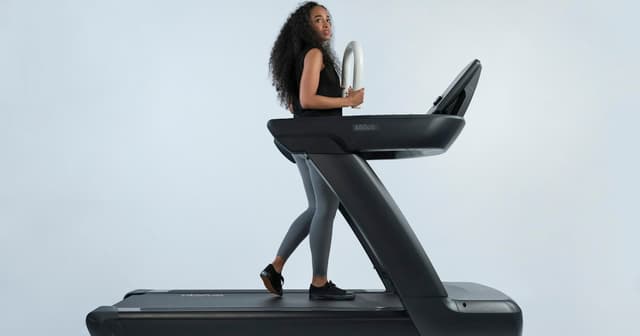
Calories burned walking incline depend on three things: your weight, speed, and grade. At 3 mph, a 150 lb person burns about 118 calories in 30 minutes on flat ground, 192 at a 5% incline, 266 at 10%, and 340 at 15%. Each 1% of grade adds about 12-13% to your flat-ground burn, so a 10% incline more than doubles it.
Most estimates of calories burned walking incline online come from MET tables that skip grade or from calculators that don't show their math. This guide uses the American College of Sports Medicine (ACSM) walking equation, the standard formula exercise physiologists use to estimate treadmill energy cost. You get the formula, a worked example, and charts by body weight, grade, and speed.
If you'd rather plug in your own numbers, the Treadmill Calorie Calculator takes your weight, speed, incline, and duration. The Treadmill Incline Calculator shows what a given grade equals on flat ground and how much elevation you climb.
Calories Burned Walking Incline: 30-Minute Chart at 3 mph
Three miles per hour is the most common incline walking speed. It's the "3" in the 12-3-30 workout and a pace most people can hold without gripping the rails. Here's the burn for a 30-minute session:
| Incline | 120 lb | 150 lb | 180 lb | 210 lb |
|---|---|---|---|---|
| 0% (flat) | 94 | 118 | 141 | 165 |
| 3% | 130 | 162 | 195 | 227 |
| 5% | 153 | 192 | 230 | 268 |
| 8% | 189 | 236 | 283 | 331 |
| 10% | 213 | 266 | 319 | 372 |
| 12% | 236 | 295 | 354 | 413 |
| 15% | 272 | 340 | 407 | 475 |
Total (gross) calories, 3.0 mph, 30 minutes, ACSM walking equation.
The pattern is very regular. At 3 mph, every 1% of incline adds about 12 calories per 30 minutes for a 120 lb walker, 15 for a 150 lb walker, 18 for 180 lb, and 21 for 210 lb. The relationship is linear, so you can estimate any in-between grade by adding up the steps.
That answers a popular search directly. At a 10% incline, 3 mph, and 30 minutes, you burn about 213-372 calories, depending on whether you weigh 120 or 210 lb. A 150 lb person lands at about 266.
Calories Burned Walking Incline for 1 Hour
Double the session and you double the burn. These hourly figures are useful if you split incline walking across the day or do longer steady sessions:
| Incline | 120 lb | 150 lb | 180 lb | 210 lb |
|---|---|---|---|---|
| 0% (flat) | 189 | 236 | 283 | 330 |
| 3% | 260 | 324 | 389 | 454 |
| 5% | 307 | 384 | 460 | 537 |
| 8% | 378 | 472 | 567 | 661 |
| 10% | 425 | 531 | 638 | 744 |
| 12% | 472 | 590 | 709 | 827 |
| 15% | 543 | 679 | 815 | 951 |
Total calories, 3.0 mph, 60 minutes.
An hour at 12-15% is hard on calves and Achilles tendons, and few beginners can hold it. Treat the bottom rows as a ceiling to build toward, not a starting point.
How Much Does Incline Increase Calories Burned Walking?
Here's the percentage increase over flat walking at the same 3 mph pace, along with the intensity in METs (multiples of your resting energy use):
| Incline | Increase vs Flat | METs | Intensity |
|---|---|---|---|
| 0% | — | 3.3 | Light-moderate |
| 3% | +38% | 4.5 | Moderate |
| 5% | +63% | 5.4 | Moderate |
| 8% | +100% | 6.6 | Vigorous |
| 10% | +125% | 7.4 | Vigorous |
| 12% | +151% | 8.3 | Vigorous |
| 15% | +188% | 9.5 | Vigorous |
So an 8% incline doubles your calorie burn, and 12% gives you about 2.5 times the flat-ground number. Very few changes to a walk raise the burn this much without making you go faster. For the flat-walking MET values behind these numbers, see the MET values walking chart.
The ACSM equation predicts these increases well. A 2014 study in the International Journal of Exercise Science (Hofmann et al.) measured walkers at 5% and 10% grade. Energy use was about 40% higher at 10%, close to the roughly 39% the equation predicts at 3 mph.
The Formula: How to Calculate Incline Walking Calories
The ACSM walking equation estimates oxygen use (VO2) from speed and grade:
VO2 (mL/kg/min) = 0.1 × speed + 1.8 × speed × grade + 3.5
- speed is in meters per minute (mph × 26.8)
- grade is the incline as a decimal (10% = 0.10)
- 0.1 × speed is the cost of moving forward
- 1.8 × speed × grade is the cost of lifting your body uphill
- 3.5 is your resting oxygen use (1 MET)
To turn oxygen into calories, use the standard estimate of about 5 calories per liter of oxygen:
Calories per minute = VO2 × body weight (kg) ÷ 1000 × 5
Worked Example: 160 lb, 3 mph, 10% Incline, 30 Minutes
- Convert units. 160 lb ÷ 2.205 = 72.6 kg. 3 mph × 26.8 = 80.5 m/min. 10% = 0.10.
- Horizontal cost. 0.1 × 80.5 = 8.05
- Vertical cost. 1.8 × 80.5 × 0.10 = 14.48
- Add resting. 8.05 + 14.48 + 3.5 = 26.0 mL/kg/min (about 7.4 METs)
- Calories per minute. 26.0 × 72.6 ÷ 1000 × 5 = 9.4 calories per minute
- Session total. 9.4 × 30 = about 283 calories
The same walker on flat ground burns about 126 calories in 30 minutes. The incline adds roughly 157 calories, and all of it comes from the vertical term. That's the main idea of incline walking: you do extra work lifting your body without having to move any faster.
Does the Formula Match Real Measurements?
Fairly well. A 2025 lab study in the International Journal of Exercise Science tested the 12-3-30 workout (12% incline, 3 mph, 30 minutes). Participants burned about 10.2 calories per minute, or about 308 calories per session. The ACSM equation predicts about 10.1 calories per minute for a 154 lb walker under the same conditions. For the 12% row by body weight and the full workout, see the 12-3-30 workout guide.
The equation works best at walking speeds of roughly 1.9-3.7 mph. Above about 15% grade, it rests on less validation data. Individual results can differ from it by 10% or more, depending on fitness, stride, and how efficiently you walk.
Incline Treadmill Calories by Speed
Incline and speed both raise the burn, and they multiply each other: the vertical term includes speed, so a faster pace makes each percent of grade cost more. Here's 30 minutes at a fixed 10% incline:
| Speed | 120 lb | 150 lb | 180 lb | 210 lb | METs |
|---|---|---|---|---|---|
| 2.0 mph | 151 | 189 | 227 | 265 | 5.3 |
| 2.5 mph | 182 | 227 | 273 | 318 | 6.4 |
| 3.0 mph | 213 | 266 | 319 | 372 | 7.4 |
| 3.5 mph | 243 | 304 | 365 | 426 | 8.5 |
| 4.0 mph | 274 | 342 | 411 | 479 | 9.6 |
Total calories, 10% incline, 30 minutes. 4.0 mph is slightly above the equation's best-validated range.
Slowing to 2.0 mph at 10% still burns more than walking flat at 4.0 mph. A 150 lb person burns 189 calories versus 145. That's why a slow, steep walk works well for people who can't or don't want to walk fast. For more on picking a belt speed, see treadmill walking speed for weight loss.
Calories Burned Walking Uphill vs Running
How steep does a walk need to be to match a jog? Using the ACSM walking and running equations, here's 30 minutes for two body weights:
| Activity | 150 lb | 180 lb | METs |
|---|---|---|---|
| Walk 3.0 mph, flat | 118 | 141 | 3.3 |
| Walk 3.0 mph, 10% | 266 | 319 | 7.4 |
| Walk 3.0 mph, 12% | 295 | 354 | 8.3 |
| Walk 3.0 mph, 15% | 340 | 407 | 9.5 |
| Walk 3.5 mph, 12% | 338 | 406 | 9.5 |
| Run 5.0 mph, flat | 309 | 371 | 8.7 |
| Run 6.0 mph, flat | 364 | 437 | 10.2 |
The crossover points:
- 3 mph at about 13% incline burns about the same as running 5 mph on flat ground.
- 3.5 mph at about 10% incline also matches a 5 mph run.
- Matching a 6 mph run takes about 13.5% at 3.5 mph, or about 17% at 3 mph.
The 2025 12-3-30 study found the same thing in the lab. Running burned calories faster (about 13.1 vs 10.2 calories per minute), but the incline walk got a higher share of its energy from fat (about 41% vs 33%) with much less impact. For the full trade-off on joints, heart rate, and fat use, read incline walking vs running.
Gross vs Net Calories: Why Your Watch Shows Less
Every number in this guide is gross (total) calories. That includes the roughly 1 calorie per kilogram per hour your body burns just staying alive. Apple Watch "active calories" and most fitness trackers report net calories, meaning only the extra burn from exercise.
To convert, subtract about 0.24 calories per pound of body weight for every 30 minutes. For a 150 lb walker, that's about 36 calories. So the 266 calories from a 30-minute walk at 10% and 3 mph becomes about 230 active calories. The resting part is already counted in your daily energy budget, which BMR vs TDEE explains.
This also explains why the console number on a treadmill often doesn't match your watch. Machines use different formulas, may or may not ask your weight, and almost never know whether you're holding on. For why treadmill readouts often run high, see are treadmill calories accurate.
Don't Hold the Handrails: It Cuts Your Burn
The easiest way to lose incline calories is to grip the rails. The 2014 Hofmann study measured walkers at 10% incline in three ways:
| How They Walked | Calories per Minute | vs Hands-Free |
|---|---|---|
| Hands-free, upright | 8.83 | — |
| Holding rails, upright | 7.77 | About 12% less |
| Holding rails, leaning back | 6.02 | About 32% less |
Holding on while standing upright made a smaller difference, which wasn't statistically significant in a group of 13. Holding on and leaning back cut the burn by about a third. At that point, a 10% incline costs less energy than walking hands-free at 5%. For a 180 lb walker, that turns a 319-calorie session into roughly 217 calories.
If you can't finish a grade without holding on, lower the incline by 2-3% and walk hands-free. You'll burn more than you would at the steeper grade while hanging off the rails, and your stride stays natural.
Tips to Get the Most From Incline Walking
- Use grade instead of speed. At 3 mph, going from flat to 5% adds more calories than going from 3 to 4 mph on flat ground, and it doesn't add impact.
- Build gradually. Start at 3-5% and add 1-2% per week. Your calves and Achilles tendons adapt more slowly than your heart and lungs.
- Stand tall. Lean slightly forward from the ankles, not the waist, and keep your arms swinging. Bending at the hips moves the work away from your glutes.
- Add time before steepness. A 40-minute walk at 8% burns about the same as a 30-minute walk at 12% (for a 150 lb walker, about 315 vs 295 calories) and is easier on your lower legs.
- Outdoor hills count, but average out. The uphill parts follow the same math. Downhills give back much of the extra cost, so a hilly loop averages less than its climbs. For trail estimates, see calories burned hiking.
- Track the whole day, not one session. An incline walk is a big part of your daily movement, but your total steps still matter for overall burn.
For the training side, including muscles worked, a 4-week progression, and form cues, see incline walking benefits. For more flat and incline treadmill numbers, including running speeds and HIIT, see calories burned on treadmill.
Frequently Asked Questions
How many calories do you burn walking on an incline for 30 minutes?
At 3 mph, a 150 lb person burns about 192 calories at a 5% incline, 266 at 10%, and 340 at 15%. A 180 lb person burns about 230, 319, and 407 at the same grades. Flat walking at that pace burns only 118 and 141.
How many calories does 10 incline, 3 mph, 30 minutes burn?
About 213 calories at 120 lb, 266 at 150 lb, 319 at 180 lb, and 372 at 210 lb. That's about 2.25 times what you'd burn walking flat at the same speed, or roughly 7.4 METs.
How many calories does 12-3-30 burn?
The 12-3-30 workout (12% incline, 3 mph, 30 minutes) burns about 236 calories at 120 lb, 295 at 150 lb, 354 at 180 lb, and 413 at 210 lb. A 2025 lab study measured an average of about 308 calories per session, in line with the ACSM estimate for a walker of about 154 lb.
How much does incline increase calories burned walking?
At 3 mph, each 1% of grade adds about 12-13% to your flat-walking burn. A 5% incline adds about 63%, 8% about doubles it, 10% adds 125%, and 15% nearly triples it. The effect is slightly larger at faster walking speeds.
Is walking on an incline better than running for calories?
Running burns more per minute, but a steep walk comes close. Walking 3 mph at about 13% grade, or 3.5 mph at about 10%, burns about the same as running 5 mph on flat ground. Many people can hold the incline walk longer, so total calories per session can end up similar.
Do you burn more calories walking uphill outside than on a treadmill?
On a steady climb at the same speed and grade, the numbers are similar. Outdoor walking adds small costs from wind and uneven ground, but real routes include downhills that lower the average. A treadmill holds the grade constant, which makes it easier to hit a calorie target.
Why is my treadmill showing different calories than these charts?
Treadmills use different formulas, often assume a default body weight, and can't tell when you hold the handrails, which can cut the real burn by up to a third. They also usually show gross calories, while watches show net active calories. For a consistent estimate, enter your real weight in the Treadmill Calorie Calculator.
Track Every Incline Walk With Steps
You now have the numbers for calories burned walking incline at any grade. What makes it add up is doing the walks week after week. Pick a grade you can hold hands-free, look up your burn in the charts above or the Treadmill Calorie Calculator, and build from there. To see what your treadmill session equals on flat ground, try the Treadmill Incline Calculator.
Steps counts your steps, distance, and calories automatically from your iPhone's motion sensors, so treadmill sessions, outdoor hills, and everyday walking all show up in one daily total. No GPS needed, and no chest strap.
Ready to make every incline walk count? Download Steps
You Might Also Like
Try Our Calculators
Steps is built by runners who wanted a step counter that felt right. Read our story